Highlights:
-
Heavy rain creates unique pressure: Intense downpours can cause water to pool or be driven upward by the wind, exposing small gaps in shingles, flashing, and seals that normal rainfall would never breach.
-
Gutters and valleys are critical drainage points: Blockages from leaves and debris in these areas create immediate dams, forcing massive amounts of water to back up directly under your roof’s protective layers.
-
Vent boots and flashing degrade first: The rubber collars around plumbing pipes and the metal seals around chimneys or skylights are highly prone to weathering and are often the primary culprits behind sudden leaks.
-
Proactive inspections prevent major damage: Regularly checking your attic for pinpricks of daylight or water stains on sunny days allows you to catch and repair vulnerabilities before a storm hits.
-
Early containment minimizes structural loss: While you cannot safely repair a roof during a storm, you can mitigate interior ceiling collapse by safely puncturing water bubbles and capturing the water inside.
There is a unique kind of dread that sets in when a massive storm hits, the rain starts pounding against your house, and you suddenly hear that slow, rhythmic drip, drip, drip coming from your ceiling. You rush to grab a plastic bucket, slide it under the leak, and watch the water slowly pool.
Roof leaks during heavy rain are incredibly common, but that does not make them any less stressful. When the sky opens up, your roof is your home’s primary line of defense. If there is a weak spot, torrential downpours will find it.
The good news? Most roof leaks do not start as catastrophic failures. They begin as minor vulnerabilities that could have been caught early. By understanding exactly why roofs leak during severe storms, you can spot the warning signs and take action before a tiny drip turns into a massive, expensive headache.
Why Is Your Roof Leaking Only When It Rains Heavily?
It can be baffling when your roof survives a light spring shower without a single issue, only to fail completely during a summer thunderstorm. This happens because heavy rain creates a set of conditions that ordinary weather simply cannot replicate.
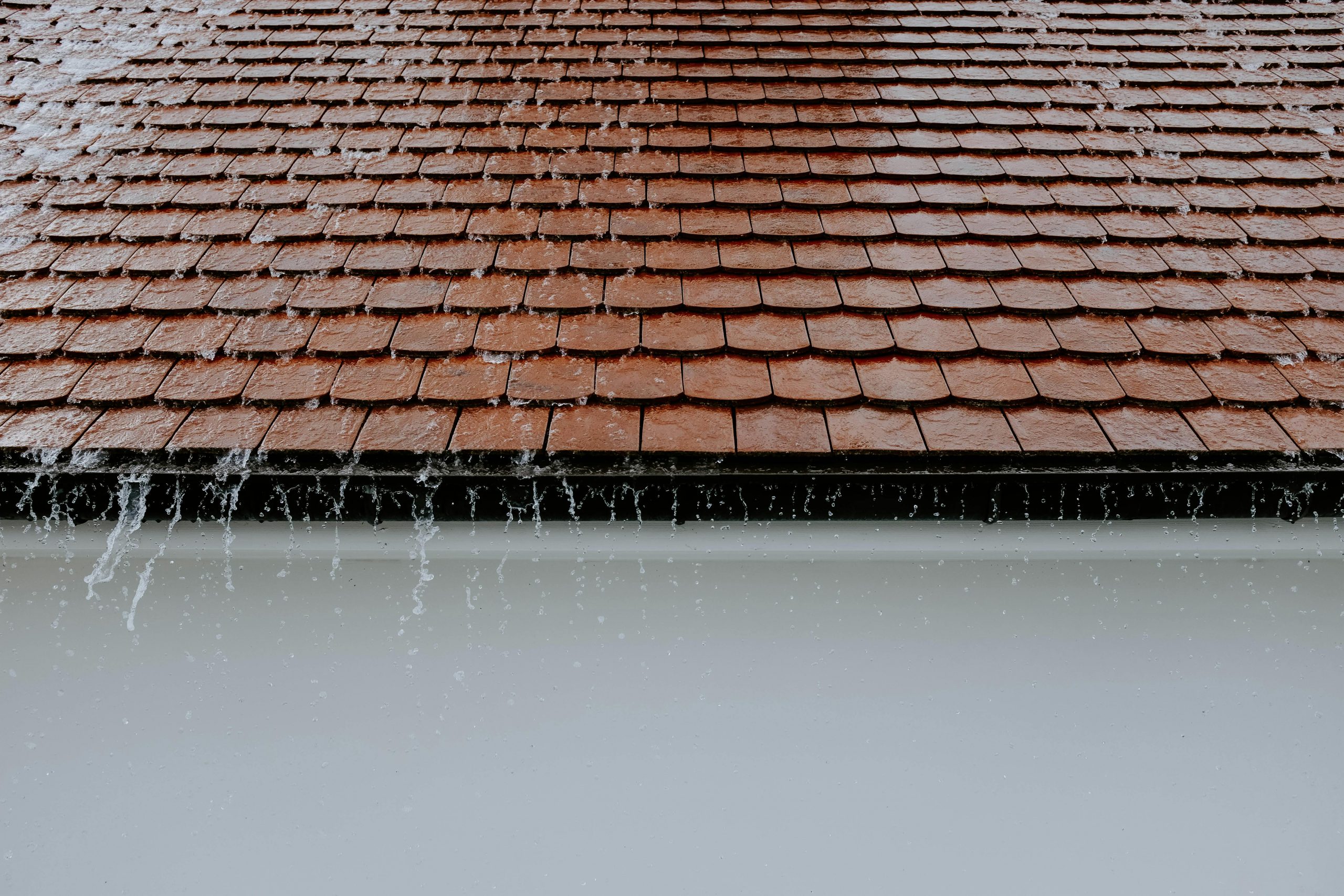
During intense downpours, a massive volume of water hits your roof simultaneously. If your home’s drainage system cannot shed this water fast enough, it begins to pool or back up. Water is incredibly patient; it will search for any microscopic gap, crack, or compromised seal. The sheer pressure of sustained wind-driven rain can push water upward and under shingles, finding paths into your home that normal gravity-fed rain never would.
Top 7 Causes of Roof Leaks During Heavy Storms

Roof leaks are rarely a mystery when you know where to look. Let us break down the seven most common culprits behind a compromised roof and how heavy rain exposes them.
1. Clogged or Damaged Gutters
Your gutters are designed to safely channel thousands of gallons of water away from your roof and foundation. When they work, they are invisible heroes. When they fail, they are a primary cause of interior water damage.
-
The Heavy Rain Impact: When leaves, twigs, and debris block your gutters, rainwater has nowhere to go. During a light drizzle, the water might slowly trickle through the debris. During a heavy downpour, the gutter quickly fills to the brim. The trapped water backs up under the edge of your roofline, seeping underneath the shingles and rotting the fascia boards and roof decking.
-
What to Look For: Sagging gutters, water spilling over the sides like a waterfall during a storm, or pools of water forming around your home’s foundation.
2. Compromised Roof Flashing
Flashing consists of the thin strips of metal installed around interruptions in your roofline, such as chimneys, skylights, dormers, and roof valleys. It is designed to act as a waterproof barrier in the spots most vulnerable to water runoff.
-
The Heavy Rain Impact: Flashing is sealed with roofing caulk or tar. Over time, exposure to harsh weather causes this sealant to dry out, crack, or peel away. When heavy rain hits, vast amounts of water funnel into these valleys and joints. If the flashing is warped, rusted, or missing its sealant, water will slide right underneath it and directly into your ceiling structure.
-
What to Look For: Visible gaps around your chimney, rusted metal strips on the roof, or water stains on the ceiling directly beneath a roof valley.
3. Aged, Damaged, or Missing Shingles
Shingles are your roof’s outer armor. They are designed to overlap seamlessly to shed water downward. However, shingles have a strict lifespan, usually lasting between 15 to 30 years depending on the material.
-
The Heavy Rain Impact: As shingles age, they lose their protective granules, become brittle, and can crack or curl. Strong winds during heavy storms can lift these weakened shingles up or rip them away entirely. Once a shingle is missing or broken, the underlayment is exposed. Heavy rain will quickly soak through this thin underlayment and saturate the wooden decking beneath.
-
What to Look For: Shingles lying in your yard after a storm, curling edges, bald spots missing granules, or visible cracks when looking at your roof from the ground.
4. Cracked Boot Seals Around Roof Vents
Your roof has several pipes poking through it, which are part of your home’s plumbing and ventilation systems. To keep these penetrations watertight, contractors install a “boot”—a plastic or metal base topped with a flexible rubber collar that tightly hugs the pipe.
-
The Heavy Rain Impact: The rubber collars on vent boots are constantly exposed to intense UV rays and temperature fluctuations. Within a decade, this rubber often becomes brittle and cracks. During a heavy rainstorm, water runs down the vertical vent pipe and slips straight through the cracked rubber seal, traveling down the outside of the pipe into your attic or walls.
-
What to Look For: Discolored drywall or peeling paint around bathroom exhaust fans, or damp insulation in the attic directly beneath a vent pipe.
5. Debris Accumulation in Roof Valleys
A roof valley is the V-shaped angle where two different roof slopes meet. These valleys act as major highways for rainwater, directing massive volumes of water down to the gutters.
-
The Heavy Rain Impact: Because valleys are sloped channels, they easily trap falling leaves, pine needles, and small branches. If this debris is left to pile up, it creates a literal dam. When heavy rain falls, the debris dam slows down the water flow, causing the water to pool and rise. This standing water eventually finds its way under the shingles flanking the valley.
-
What to Look For: Dark piles of wet leaves sitting in the folds of your roofline long after the rain has stopped.
6. Poorly Sealed or Aged Skylights
Skylights are fantastic for letting in natural light, but they are essentially giant holes cut into your roof. Keeping them waterproof requires perfect installation, flawless flashing, and high-quality rubber seals.
-
The Heavy Rain Impact: The rubber seals holding the glass pane into the skylight frame degrade over time. Furthermore, the flashing surrounding the skylight is prone to shifting as your house naturally settles. When heavy rain hits, wind can force water up and over the flashing, or water can seep directly through the degraded window seals, causing immediate drips inside your living room or bedroom.
-
What to Look For: Condensation trapped between the glass panes of your skylight, or water dripping directly from the light well frame during a storm.
7. Condensation and Hidden Attic Issues
Sometimes, what looks exactly like a roof leak isn’t a roof leak at all. It can be a systemic ventilation failure inside your attic space that mimics a storm-induced leak.
-
The Heavy Rain Impact: During a heavy, humid storm, the moisture levels in the air skyrocket. If your attic lacks proper ventilation (like soffit, ridge, or gable vents), hot, humid air from your home gets trapped inside. When this warm, wet air hits the cold underside of your roof deck during a cool rainstorm, it rapidly condenses into water droplets. This moisture can pool and drip down, perfectly mimicking a traditional roof leak.
-
What to Look For: A musty smell in your upper floors, a noticeable spike in indoor humidity during storms, or frost on the underside of your roof during colder months.
How Can You Detect a Hidden Roof Leak Before the Next Big Storm?
You do not have to wait for a torrential downpour to find out if your roof is compromised. In fact, proactive detection is the cheapest and safest way to manage roof maintenance.
+------------------------+---------------------------------------+------------------------------------------+
| Area to Check          | What to Look For (Interior)           | What to Look For (Exterior)              |
+------------------------+---------------------------------------+------------------------------------------+
| Attic Space            | Damp insulation, mold, dark stains    | Daylight shining through the roof boards |
| Ceilings & Walls       | Peeling paint, bubbling drywall       | Algae growth, sagging rooflines          |
| Roof Surface           | N/A                                   | Missing shingles, cracked vent boots     |
+------------------------+---------------------------------------+------------------------------------------+
| Gutters & Downspouts   | Water stains on interior fascia       | Standing water, loose brackets, debris   |
+------------------------+---------------------------------------+------------------------------------------+
To find hidden issues early, grab a flashlight and head up to your attic on a bright, sunny day. Turn off the attic lights and look up at the rafters. If you see pinpricks of daylight poking through the roof boards, you have found a guaranteed spot where heavy rain will enter.
Next, check for dark water stains, mold growth, or damp insulation along the wood framing. If you are comfortable doing so, you can also perform a “hose test.” Have someone stand on the roof with a garden hose, spraying one section of the roof at a time, while you stand in the attic with a flashlight watching for the first sign of moisture.
What Are the Hidden Risks of Letting a Small Leak Slide?
It is incredibly tempting to ignore a minor leak. If a leak only occurs during rare, severe storms and only results in a few drops of water, you might think you can put off fixing it until next season.
This is a dangerous assumption. Understanding the dangers of ignoring minor roof leaks can save you from a structural and financial nightmare. Water does not stay contained in one spot. Once it breaches your roof, it travels along rafters, behind drywall, and through electrical conduits. Over time, even a tiny trickle can rot the structural wooden beams holding your house up, destroying the integrity of your home.
Critical Safety Note: Water and electricity do not mix. Roof leaks often travel down interior walls where electrical wiring and junction boxes are located. A hidden leak can short out your electrical system or, in worst-case scenarios, spark a dangerous electrical fire.
Furthermore, a damp attic or wall cavity is the perfect breeding ground for toxic black mold and mildew. Mold can begin growing within 24 to 48 hours of water exposure. Once it takes hold in your insulation and drywall, it releases airborne spores that can cause severe respiratory issues, allergies, and chronic health problems for your family. This is why roof leak repairs should not wait under any circumstances. What costs a few hundred dollars to patch today could easily turn into a multi-thousand-dollar mold remediation and structural rebuild project tomorrow.
How Do You Stop a Roof Leak in the Middle of a Storm?
If your roof starts leaking during a massive rainstorm, you cannot jump up on a wet, slippery roof to fix it. That is incredibly dangerous. However, you can take immediate steps to minimize the interior damage.
Contain the Influx of Water
Your first priority is protecting your belongings and flooring. Move all furniture, electronics, and valuables out of the splash zone. Place a sturdy bucket, plastic bin, or pot directly under the drip.
Pro Tip: To eliminate the loud, annoying plop sound of water hitting the plastic bucket, tape a piece of string to the ceiling right next to the leak and let it hang down into the bucket. The rainwater will travel down the string silently instead of splashing everywhere.
Release the Pressure from Ceiling Bubbles
If you notice the paint or drywall on your ceiling beginning to bubble and sag, it means water is pooling on top of the drywall. If left alone, the weight of the water will eventually cause a large chunk of the ceiling to collapse violently.
Take a screwdriver, a long nail, or a drill, and carefully poke a small hole right in the center of the bubble. Be sure to have a bucket directly underneath. This safely drains the trapped water, relieves the pressure on your drywall, and prevents a much larger, messy collapse.
Tarp the Attic Inside
If you can safely access your attic during the storm, try to locate the source of the leak from the inside. Do not try to plug the hole from the inside with caulk or foam, as this will trap water inside the wood and cause rapid rotting. Instead, place a large plastic tub or bucket under the leak, or lay down a heavy-grade plastic tarp across the attic floor insulation to prevent the water from soaking into your living space ceiling below.
What Are the Steps to Fix a Roof Leak Permanently?
Once the storm clears and the sun comes out, it is time to move from damage control to a permanent fix. Depending on your DIY comfort level and the severity of the damage, you have two primary paths.
Option A: The DIY Quick Fixes
If the leak is caused by a simple, straightforward issue, you can often handle the repair yourself with basic safety gear and materials from your local hardware store.
-
Clearing and Re-sealing Flashing: If you find gaps in the flashing around your chimney or valleys, scrape away the old, dried-out roofing caulk with a putty knife. Clean the area thoroughly to remove dirt and moss. Apply a generous bead of high-quality, weather-resistant exterior roofing sealant into the gaps using a caulk gun. Smooth it down to ensure a completely watertight bond.
-
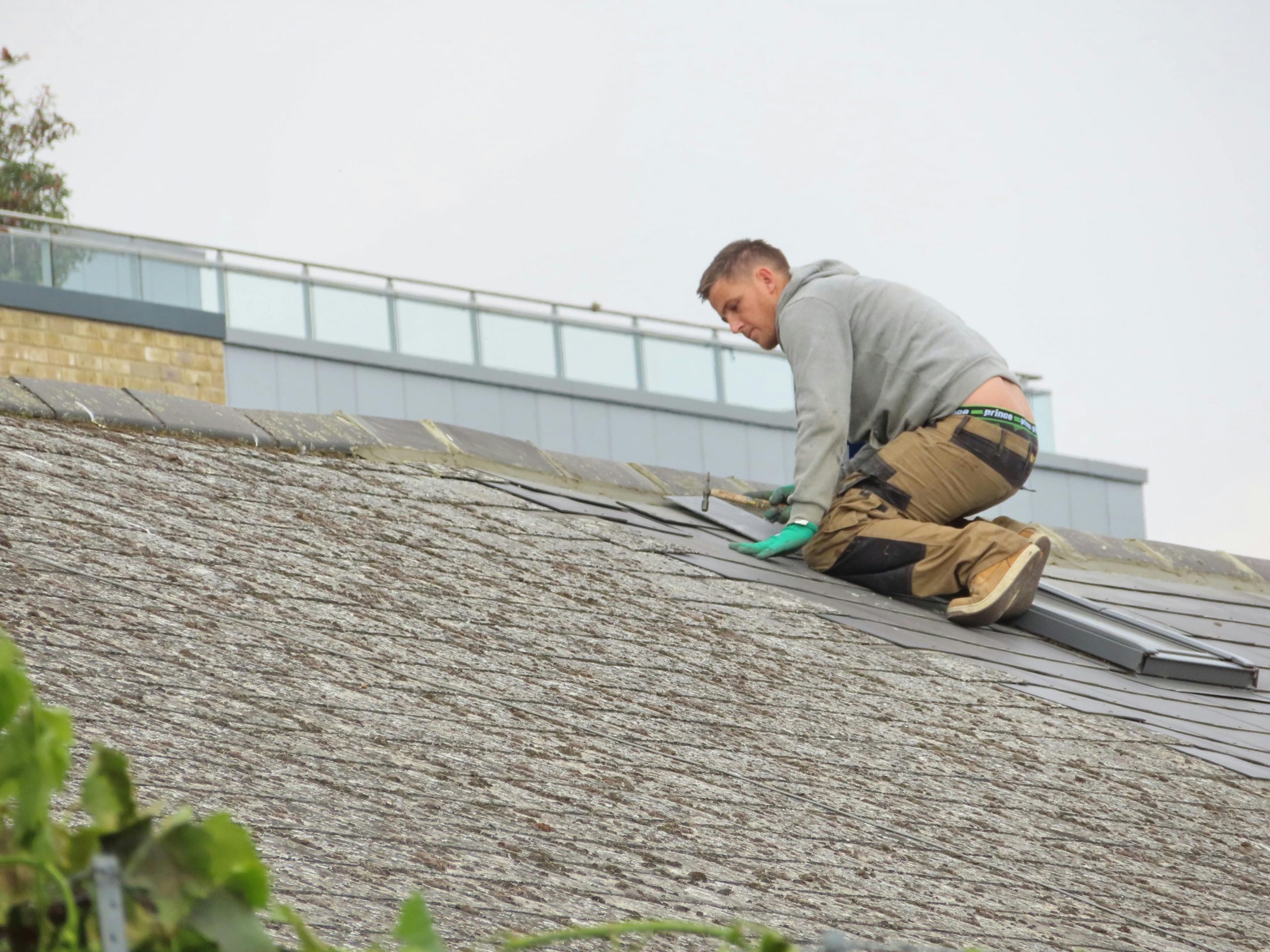
Replacing a Damaged Shingle: If a shingle is cracked or missing, use a pry bar to gently slide underneath the shingle directly above the damaged one to lift it up and expose the nails. Carefully remove the nails securing the broken shingle and slide it out. Slide a new, matching shingle into place, drive new roofing nails just above the self-sealing strip, and apply a small dab of roofing cement to the underside of the shingle tabs to lock it down against the wind.
-
Replacing a Vent Boot: If the rubber collar around your plumbing vent is cracked, you do not necessarily have to tear out the whole metal base. You can purchase a specialized “split-boot” or a rubber repair collar. Slide this collar down over the pipe, press it firmly over the old, cracked rubber, and secure it with exterior screws and roofing sealant.
Option B: Knowing When to Call a Professional
While DIY fixes are great for minor maintenance, some roof leaks require the specialized tools, materials, and expertise of a licensed roofing contractor. You should always call a professional if:
-
The roof pitch is incredibly steep, or your home is more than two stories high.
-
The leak is extensive, and water is coming down in multiple rooms simultaneously.
-
You suspect structural rot in the roof rafters or plywood decking.
-
The roof is nearing the end of its natural lifespan and likely needs a complete replacement rather than a patch.
-
You cannot safely identify where the water is entering, despite trying a hose test.
A professional roofer can use advanced tools like infrared thermal imaging cameras to track hidden moisture pathways behind your walls without tearing up your drywall unnecessarily. They also carry liability insurance, ensuring that if anything goes wrong during the repair, you are fully covered.
How Can You Prevent Future Roof Leaks with a Seasonal Maintenance Plan?
The best way to handle a roof leak is to prevent it from ever happening in the first place. By establishing a simple, twice-a-year maintenance routine, you can extend the life of your roof by a decade and maintain complete peace of mind during heavy rains.
Every Spring: The Post-Winter Assessment
Winter weather can be incredibly harsh on roofing materials. Freezing temperatures cause materials to contract, which can crack old sealants.
-
Check for Shingle Damage: Look for shingles that may have been split by freezing ice or loosened by winter winds.
-
Inspect the Flashing: Ensure that snow and ice buildup did not warp or pull the metal flashing away from the chimney or dormers.
-
Clean the Gutters: Clear out any leftover autumn debris or grit from your shingles that washed into the gutters during winter snowmelts.
Every Autumn: Preparing for the Storm Season
Fall is the most critical time for roof maintenance, as falling leaves pose an immediate threat to your home’s drainage systems.
-
Deep Clean Gutters and Downspouts: Ensure that water can flow completely unobstructed. Consider installing gutter guards if your home is surrounded by mature trees.
-
Trim Overhanging Tree Branches: Heavy winds can cause tree branches to scrape against your roof, scraping off protective shingle granules or breaking shingles entirely. Dead branches can also snap during a storm and crash through your roofline. Keep all branches trimmed back at least six to ten feet away from your roof.
-
Look for Moss and Algae: Moss holds onto moisture like a sponge. If it grows underneath your shingles, it will lift them up and trap water against the wooden roof deck. Treat any moss or algae growth with a roof-safe antimicrobial wash.
Summary: Protecting Your Home from the Top Down
Your roof is a complex, engineered system designed to protect your most valuable investment: your home. While heavy rain storms are an inevitable part of nature, catastrophic roof leaks do not have to be.
By keeping your gutters clear, inspecting your flashing annually, and replacing damaged shingles as soon as they show signs of wear, you can stop water in its tracks. Pay attention to the warning signs your home gives you, take quick action when a drip appears, and enjoy the comforting sound of a heavy rainstorm knowing your roof is completely secure.