It starts as a small dark rectangle on your roofline that you barely notice from the driveway. Weeks or months later, you’re staring at a brown stain spreading across your ceiling and wondering how a single missing shingle turned into a five-figure repair bill. The truth is that roofs fail gradually, then suddenly, and understanding that timeline can save your home from serious water damage. This article walks through exactly how that small problem escalates, and what you can do at each stage to stop it.
How a Single Shingle Keeps Your Roof Watertight

Every shingle on your roof overlaps with the ones around it, creating a layered barrier that channels water downward and off the structure. When one shingle blows off or cracks, that overlap is broken, and the underlayment beneath is exposed directly to sun, wind, and rain. Underlayment is a secondary barrier, not a permanent one, and it was never designed to handle sustained exposure on its own. Within a few rain cycles, water starts finding the seams and nail holes that the shingle used to cover.
This is why roofing professionals treat missing shingles as urgent rather than cosmetic. A single gap might seem minor, but wind tends to lift the shingles surrounding the exposed area next, widening the vulnerable zone with every storm. What looks like one missing tile is often the first sign that several more are loosened and ready to go.
Why Water Travels Far From the Original Leak Point
One of the most confusing parts of roof damage is that the stain on your ceiling rarely sits directly below the missing shingle. Water follows the path of least resistance, running along rafters, sheathing, and insulation before it finally soaks through drywall in a completely different spot. This means the visible damage inside your home can be several feet away from the actual entry point on the roof.
Because of this traveling behavior, homeowners often patch the wrong spot or assume a repair fixed the issue when it did not. Tracing water back to its source usually requires someone to get into the attic and look for water trails, dark streaks, or damp insulation. Without that step, the same ceiling stain can reappear months later even after drywall repairs are completed.
- Check attic rafters near the stain for discoloration or soft spots
- Look for compressed or matted insulation, which signals repeated moisture
- Note any daylight visible through the roof deck
- Smell for mustiness, which often shows up before visible mold does
What Happens to Wood Framing Once Water Gets In
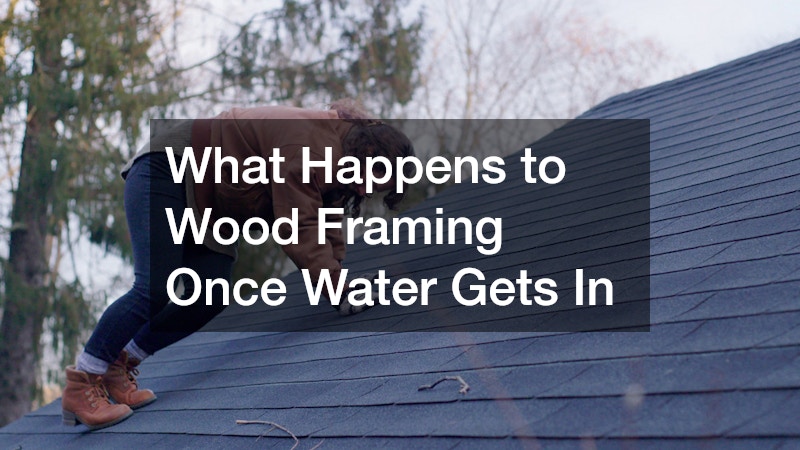
Wood framing is remarkably durable when it stays dry, but sustained moisture changes everything. Repeated wetting and drying cycles cause wood fibers to swell, weaken, and eventually rot, and that process can take hold long before anyone notices a stain. Rafters and joists that lose structural integrity can no longer support the weight of the roof deck and insulation above them.
This is the point where a sagging ceiling becomes a real possibility rather than a distant worry. A ceiling that dips or feels spongy when pressed is often a sign that the framing above it has already been compromised. Left unaddressed, that sag can progress to a partial or full collapse, which is far more dangerous and expensive than the original leak ever was.
Warning Signs That Your Ceiling Is Already in Trouble
Most ceiling failures give warning signs well before anything actually falls. Homeowners who catch these signs early tend to face a fraction of the repair cost compared to those who wait. Paying attention to texture, color, and shape changes on your ceiling is one of the simplest ways to protect your home.
- Yellow or brown rings that grow larger after each rain
- Peeling paint or bubbling drywall texture
- A slight dip or sag visible when viewed at an angle
- Cracking sounds or visible hairline cracks radiating from one point
- A musty smell that lingers even with windows open
Steps to Take the Moment You Spot Roof Damage

Speed matters once you notice a leak or missing shingle, because every additional rainstorm compounds the damage already done. The first move should be documenting the issue with photos, both from the ground outside and from inside the attic if it’s safe to access. This documentation becomes valuable later for insurance claims and for giving a roofer an accurate picture of the problem.
Many companies now offer emergency roof repairs specifically because they understand how quickly a small leak can turn into a structural issue. A tarp placed over the damaged section can buy time until a full repair is scheduled, especially during storm season when schedules fill up fast. Waiting even a week or two during heavy rain can be the difference between a patch job and a full section replacement.
- Photograph the damage from multiple angles
- Move furniture and belongings away from the affected ceiling area
- Place a bucket or tarp to catch active drips
- Call for professional help rather than climbing onto a wet roof yourself
Choosing the Right Professional to Inspect the Damage
Not every home repair person is equipped to properly diagnose roof and ceiling damage, and this is one area where experience really shows. A qualified roofing contractor will inspect not just the visible shingles but the flashing, vents, and valleys where leaks commonly originate. They should also be willing to check the attic space rather than relying solely on a ground-level look at the shingles.
When comparing options, ask about licensing, insurance, and whether they specialize in residential roofing versus commercial projects, since the techniques and materials can differ significantly. A skilled roofing contractor will walk you through what they find, show you photos if possible, and explain the reasoning behind their recommended repair rather than just quoting a price. Getting a second opinion is reasonable for anything beyond a simple shingle swap, particularly if structural damage is suspected.
- Verify licensing and liability insurance before any work begins
- Ask for references from recent local jobs
- Request a written estimate that separates labor and materials
- Confirm whether they offer any warranty on workmanship
What Different Roofing Materials Mean for Repair Complexity

Not all roofs fail the same way, and the material on your home changes both the risk profile and the repair process. Asphalt shingles are the most common and generally the easiest to patch quickly, which is part of why they remain popular. A slate roof, on the other hand, involves individually cut stone tiles that require specialized tools and training to replace without cracking the surrounding pieces.
Homeowners with older or higher-end roofing materials should be especially cautious about hiring generalists for repairs. Improper handling of slate or tile can cause more breakage than the original damage, turning a small fix into a much larger project. It’s worth asking directly whether a roofing company has experience with your specific roof type before scheduling any work.
Handling Water Damage After the Roof Is Fixed
Fixing the roof stops new water from entering, but it does not undo the damage already sitting inside your walls, ceiling, and insulation. This is where water restoration becomes necessary, particularly if moisture has been present for more than 48 hours, since that is roughly the window before mold growth becomes likely. Professional drying equipment, moisture meters, and antimicrobial treatments are typically needed to fully resolve the problem rather than just letting it air dry.
Skipping this step is one of the most common mistakes homeowners make after a leak. Replacing drywall over still-damp insulation or framing simply traps moisture where you can’t see it, setting up a repeat problem down the road. A proper restoration process also includes documentation that can support any insurance claim tied to the original roof failure.
- Use moisture meters to confirm materials are fully dry before rebuilding
- Remove and replace insulation that has absorbed water
- Treat affected framing to prevent mold growth
- Keep all receipts and reports for insurance purposes
Protecting the Rest of Your Home’s Exterior
Roof problems rarely stay isolated, especially when wind-driven rain is involved, and siding is often the next casualty. Water that runs down an exterior wall can seep behind siding panels through gaps as small as a nail hole or a warped seam, leading to rot in the sheathing underneath even if the siding itself looks fine from the street. This kind of hidden damage can go unnoticed for months, since discoloration or soft spots often don’t appear on the surface until the wood beneath has already started to decay.
Fiber cement, vinyl, and wood siding each hide water damage differently, which is why an untrained eye can easily miss the signs. Vinyl panels may look perfectly intact while trapping moisture against the sheathing behind them, while wood siding might show subtle cupping or peeling paint long before any structural issue is visible. Fiber cement tends to hold up longer, but even it can allow water intrusion at poorly sealed joints and corners.
A trustworthy siding contractor can check whether water has migrated into these areas during the same visit as a roof inspection, often using a moisture meter to test suspect sections without tearing into the wall. Catching this early can mean the difference between a simple caulking repair and replacing entire sections of sheathing, which can cost several thousand dollars depending on the size of the affected wall. Bundling the siding check with your roof inspection also saves time and typically costs less than scheduling two separate service calls.
A missing shingle rarely travels alone. The same wind or hail that lifted it off your roof likely rattled your gutters, dented your fascia, or cracked a section of siding, so it pays to check the whole exterior envelope rather than just the roofline.
Many companies that handle roofing also offer siding services, which can simplify scheduling and give you one point of contact for a combined repair. Instead of coordinating two separate estimates, inspection windows, and warranty documents, you get a single contractor who can assess the roof-to-wall flashing, soffits, and siding panels in one visit.
Bundling these inspections after a major storm is a practical way to catch secondary damage before it becomes its own expensive problem. For example, water that seeps behind loose siding can rot sheathing just as easily as a roof leak can rot decking, and both issues often stem from the same weather event. A single walkthrough that covers gutters, flashing, and siding services alongside roof repair can flag these overlapping vulnerabilities early.
It also tends to be more cost effective than hiring separate crews for what is often related storm damage. Combined estimates frequently reduce labor overlap and travel charges, and some contractors offer a discount when roofing and siding work are scheduled together. Beyond the savings, a unified repair plan means fewer disruptions to your home and a lower chance that one contractor’s work gets blamed for a problem another crew actually caused.
Building a Maintenance Routine to Prevent Repeat Damage
Most roof failures trace back to small issues that went unnoticed for months or years, which makes routine maintenance one of the best investments a homeowner can make. Scheduling a professional roof service once or twice a year, particularly before and after harsh weather seasons, catches loose shingles and worn flashing before they turn into leaks. This is far less expensive than emergency repairs and dramatically reduces the odds of ever facing a sagging ceiling again.
Simple habits at home also make a difference between inspections. Keeping gutters clear, trimming overhanging branches, and doing a visual scan of your roofline after major storms all help catch problems early. Consistently using the same roof service for repairs and checkups also means subtle changes get noticed sooner, since the technicians already know the roof’s history and condition.
- Schedule professional inspections in spring and fall
- Clear gutters and downspouts at least twice a year
- Trim tree branches that hang over the roofline
- Keep a written record of past repairs and inspection dates
A missing shingle will never fix itself, and every season it goes unaddressed increases the odds of hidden water damage spreading into your framing and ceiling. The good news is that catching problems early, whether through routine inspections or quick action after a storm, keeps small repairs small. If you’ve noticed any warning signs in your own home, the next right step is getting a qualified professional out to inspect your roof before the next heavy rain arrives.