
Flat roofs offer sleek architectural lines, cost-effective construction, and excellent space efficiency. By eliminating the vast attic spaces of traditional roofs, they unlock valuable footprints for HVAC units, solar arrays, or outdoor living areas. However, this distinct lack of a natural incline means flat roofs require a specialized approach to care.
Unlike a pitched roof, which sheds water instantly, a flat surface must act as a completely watertight, monolithic basin. It must withstand ponding water, relentless ultraviolet radiation, structural expansion, and debris accumulation without gravity’s help. Frame your maintenance approach not as an emergency response to a ceiling leak, but as a consistent, preventative strategy that protects the building’s structural integrity and maximizes the lifespan of your roofing system.
Routine Surface Cleansing and Debris Management

The foundational pillar of flat roof preservation is keeping the surface clean. Because these roofs feature very slight drops toward drainage points, they naturally act as collectors for everything the wind carries, gathering thick layers of organic matter that threaten the underlying membrane.
Clearing Organic Waste to Prevent Biological Growth and Standing Water
When leaves, twigs, and airborne dirt remain on a low-slope roof, they do not simply dry up and blow away. Morning dew and rainfall mix with this debris, creating a damp mat that functions exactly like mulch in a garden. This trapped moisture sits directly against the outer membrane, subjecting seams to continuous hydrostatic pressure. As it decomposes, it creates a breeding ground for moss, algae, and fungi, whose root-like structures can slowly penetrate single-ply membranes.
To prevent this biological breakdown, clear the surface every spring and autumn. Use a soft-bristled push broom or a leaf blower to gently move loose debris toward a central collection point. Never use a metal-tined rake or a high-pressure power washer held too close, as these can easily puncture a membrane or strip away protective mineral granules. If you are managing a large commercial space or feel uncomfortable working at heights, hiring a professional roofing service is an effective way to ensure the membrane is cleaned thoroughly and safely without accidental physical damage. Maintaining a pristine surface ensures that your flat roofing remains the durable barrier it was engineered to be.
Unclogging Scuppers, Internal Drains, and Gutter Systems
A flat roof is only as good as its drainage system. Flat roofs typically rely on a combination of perimeter scuppers, internal drains, and heavy-duty gutter systems to channel water away from the building. Regularly walk the roof to inspect every drainage opening. Debris naturally migrates toward these exits during heavy downpours, quickly forming a tight plug over the drain grate.
Ensure every internal drain is equipped with a clean dome-style leaf strainer to keep water flowing even if leaves accumulate around the base. Flush internal lines with a garden hose to clear silt, and check that perimeter scuppers are free of old caulking or ice dams. When drainage points are blocked, dangerous ponding occurs. Because water weighs approximately 62.4 pounds per cubic foot, a large ponding area can add thousands of pounds of dead weight, causing the structural framing to sag and eventually leading to sudden structural failure.
Seasonal Inspection Protocols and Identifying Early Warning Signs

Because a low-slope roof undergoes immense stress from weather variations, conducting a bi-annual inspection is non-negotiable—ideally in early spring and late autumn. Catching small, localized material failures early prevents devastating structural repair bills.
Spotting Blisters, Creases, and Open Seams in Membrane Systems
When walking your roof, train your eyes to look for specific visual anomalies. For rubber-based or thermoplastic options, the seams are the most vulnerable points. Look closely at the edges where sheets overlap to ensure building settlement and solar heat have not caused factory adhesives or hot-air welds to fail, creating gaps where wind-driven rain can enter.
For asphalt-based systems, look closely for blisters and creases. Blisters occur when small amounts of moisture become trapped between layers during installation; as the sun heats the roof, these pockets expand into bubbles that can shatter when walked on. Additionally, watch for alligatoring—a pattern of fine, intersecting cracks indicating the bitumen has lost its flexibility due to age and heat. If you notice these patterns, consulting with experienced local roofers can help you determine if the material can be saved with an elastomeric coating. A qualified roofer can identify these subtle changes before they breach the building’s interior.
Evaluating the Impact of Thermal Shock and UV Degradation
Flat roofs are subjected to extreme thermal shock. On a hot summer day, surface temperatures can exceed 150 degrees Fahrenheit, but a sudden thunderstorm can drop that temperature by 70 degrees in minutes. This rapid contraction exerts immense mechanical stress on perimeter flashings, counter-flashings, and termination bars fixed to parapet walls. Inspect these termination zones carefully to ensure fasteners have not backed out due to thermal movement. Also, check the condition of protective ballast or coatings, verifying that gravel is evenly distributed and that reflective coatings have not flaked away, leaving bare patches exposed to direct UV rays.
Proactive Repairs and Minor Restoration Techniques
When an inspection reveals a minor flaw, immediate action must be taken. Delaying a small patch on a flat roof is a high-stakes gamble because water can travel horizontally through insulation layers, appearing far from the actual breach.
Patching Small Punctures and Re-sealing Flashing Terminations
If you discover a localized puncture from a dropped tool or fallen branch, you can perform an emergency patch to stabilize the system, provided the materials are chemically compatible with your roof. Scrub the area meticulously with a specialized cleaner to remove dirt and oxidation. For rubber roofs, apply a self-adhering, pressure-sensitive patch cut with rounded corners so the wind cannot peel the edges. Use a silicone hand roller to press the patch firmly into place from the center outward, then apply a bead of high-grade lap sealant around the perimeter.
While these steps can stop an immediate leak, they are temporary measures. For a permanent solution that maintains your warranty, it is wise to bring in certified roofing contractors who possess the commercial hot-air welding equipment required to thermally fuse permanent patches onto thermoplastic systems. This proactive approach ensures a lasting roof repair.
When to Call Specialists for Complex Structural and Material Penetrations
The vast majority of flat roof leaks develop around structures that break through the membrane, such as HVAC curbs, plumbing vent stacks, and skylights. These areas rely on complex, multi-layered flashing details, pitch pockets, and termination bars to maintain a seal while structures vibrate and shift. If an HVAC unit vibrates heavily, it can slowly break down the caulking around its base curb. Attempting to slather generic hardware-store roofing cement over a leaking pitch pocket is a short-term band-aid that often traps moisture inside the assembly.
When penetrations begin to fail, it is time to step back and call in a specialized roofing company. Professional technicians have the training to disassemble counter-flashings, inspect the condition of the underlying vapor barrier, replace wet insulation boards, and re-flash the entire penetration using factory-molded components. This level of expertise ensures the repair survives the mechanical vibrations unique to rooftop utility equipment.
Managing Specialized Flat Materials and Complex Commercial Systems

Managing a flat roof effectively requires understanding the specific quirks, limitations, and maintenance demands of the particular chemistry protecting your property.
Maintaining Specialized Low-Slope Coated and Built-Up Substrates
Traditional multi-layer built-up roofs, often called tar and gravel systems, consist of alternating layers of bitumen-soaked felt topped with aggregate. Maintenance revolves around monitoring the gravel layer; if wind scours the gravel away, the exposed asphalt plies will quickly bake and crack in the sun. Periodically sweep loose gravel back over bare spots or apply a fresh flood coat to lock the aggregate back down.
Single-ply thermoplastic membranes require a clean surface to maximize heat reflection and reduce cooling costs. Wash the membrane annually with a mild, biodegradable detergent to restore its energy-saving properties and make inspections easier. If your structure utilizes specialized low-slope metal panels, your primary concern shifts to corrosion control and fastener integrity. Industrial metal roofers look closely at the neoprene washers beneath self-tapping screws. Over a decade of exposure, these rubber washers dry out and crack, turning screw holes into potential micro-leaks. Replacing worn fasteners and re-coating overlapping metal seams with high-tensile silicone coatings is the key to maintaining these rigid systems.
Coordinating Fleet and Building Upgrades Without Damaging the Membrane
A significant portion of flat roof damage is completely self-inflicted by foot traffic and secondary trades working on HVAC units, solar arrays, or windows. Workers frequently drop tools, drag heavy panels, or spill aggressive chemicals like solvents, oils, and air conditioner refrigerants. To prevent this, implement a mandatory logging system where any contractor must sign in before accessing the roof. Lay down heavy-duty, highly visible rubber walkway pads along the most frequently traveled routes, and insist that all contractors stay strictly on these reinforced paths. Furthermore, require tradesmen to use protective catch pans whenever they are handling oils, paints, or solvents, as petroleum-based spills can chemically dissolve certain membranes within a matter of days.
Long-Term Capital Planning: Restoration vs. Full System Upgrades
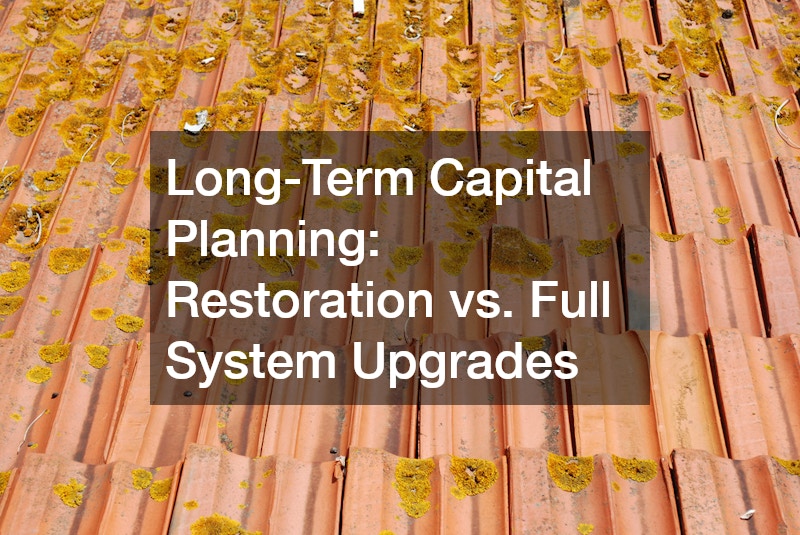
Even with meticulous clearing of debris, every flat roof will eventually reach the end of its natural service life. Managing a flat roof successfully means recognizing when the system has transitioned from a maintainable asset into a liability that requires a structural overhaul.
Assessing Core Structural Damage to Determine If the System Has Failed
The critical turning point in long-term planning is determining whether moisture has breached the membrane and saturated the insulation core beneath. When water leaks through a seam, it spreads horizontally through the porous insulation boards, destroying their thermal R-value and rotting the structural roof deck below. To accurately diagnose this hidden damage without tearing the roof apart, hire a specialist to conduct a nighttime infrared roof moisture survey. Dry insulation cools down rapidly after sunset, while pockets of trapped water hold onto heat for hours, allowing an infrared camera to pinpoint the exact boundaries of saturated zones.
If the infrared scan shows that less than 20 to 25 percent of the insulation is saturated, a full tear-off may be unnecessary; you can surgically replace the localized insulation boards and apply a high-performance silicone restoration coating over the entire field. However, if the saturation is widespread, or if you notice sagging roof decking or interior water damage, the system has fundamentally failed. At this point, attempting further patch modifications is a waste of capital, and you must prepare for a full system upgrade.
Budgeting for Structural Overhauls and Selecting Qualified Industrial Specialists
A complete tear-off and replacement of a flat roof is a major capital project that requires careful budgeting and strict contractor vetting. Unlike a simple residential job, low-slope replacements involve complex wind-uplift calculations, building code energy compliance requirements, and specialized safety protocols.
When planning this expenditure, gather detailed proposals from certified flat roofing contractors who specialize specifically in low-slope applications. Verify that the bidding firms carry comprehensive commercial liability insurance, specialized workers’ compensation policies, and direct manufacturer certifications that authorize them to issue extended material and workmanship warranties. Ensure the project scope addresses core structural issues, such as re-sloping the roof using tapered insulation boards to permanently eliminate historic ponding areas. Carefully evaluate the long-term benefits of upgrading your system to a thicker, premium membrane or incorporating higher R-value insulation, which can drastically lower your property’s energy costs over the next quarter-century. Taking the time to properly vet your project crews ensures that your substantial capital outlay results in a highly durable roof replacement that completely secures your building’s future.
Maintaining a flat roof requires shifting your mindset from reactive repair to disciplined, proactive stewardship. Because these low-slope systems lack the natural drainage assistance of a pitched roof, they rely entirely on the continuous integrity of their membranes, the absolute cleanliness of their drainage points, and the careful management of physical and environmental stresses. By committing to systematic debris removal every spring and autumn, mastering the visual cues of early membrane failure, and protecting the roof surface from negligent foot traffic and incompatible chemicals, you can effectively double the lifespan of your system.
While no roof will last forever, consistent care and timely, professional interventions transform what could be a volatile structural liability into a highly dependable, durable asset. When you invest the time and resources to properly inspect, restore, and eventually upgrade your low-slope system using qualified specialists, you secure the foundation of your entire property. A well-maintained flat roof provides total peace of mind, ensuring that everything and everyone beneath its shield remains safe, dry, and protected for decades to come.